Table of Contents
Introduction
Technology has always evolved to make life simpler, faster, and more efficient. Over the past two decades, we have seen a rapid shift from bulky desktop computers to sleek smartphones, and from wristwatches to advanced smartwatches. Each innovation has taken us a step closer to a world where digital tools blend seamlessly into our daily lives. Now, we stand at the next big stage of this evolution: smart glasses.
Smart glasses may look like regular eyewear, but they are equipped with powerful technology that allows us to perform multiple tasks without pulling out a phone. With features like hands-free calling, real-time navigation, music streaming, notifications, and even augmented reality (AR) overlays, they are redefining how people communicate and interact with the digital world. Imagine receiving turn-by-turn directions directly in your vision while cycling, or answering a phone call while your hands are busy cooking. That’s the power of smart glasses.
What makes smart glasses different from other wearables, such as smartwatches, is their unique ability to keep your focus on the world around you. Instead of constantly looking down at a screen, you can stay present while still accessing important information. This makes them particularly useful for professionals, travelers, fitness enthusiasts, students, and even healthcare workers.
As of 2025, several companies like Meta, Bose, Amazon, Google, Xiaomi, and Apple are investing heavily in smart glasses. The result is a growing range of products that balance style with advanced features, bringing us closer to a future where glasses may replace—or at least complement—smartphones.
This blog takes a deep dive into the world of smart glasses: their features, benefits, industry applications, challenges, future potential, and buying advice. If you’re curious about where wearable technology is heading, smart glasses are the trend to watch.
What Are Smart Glasses?

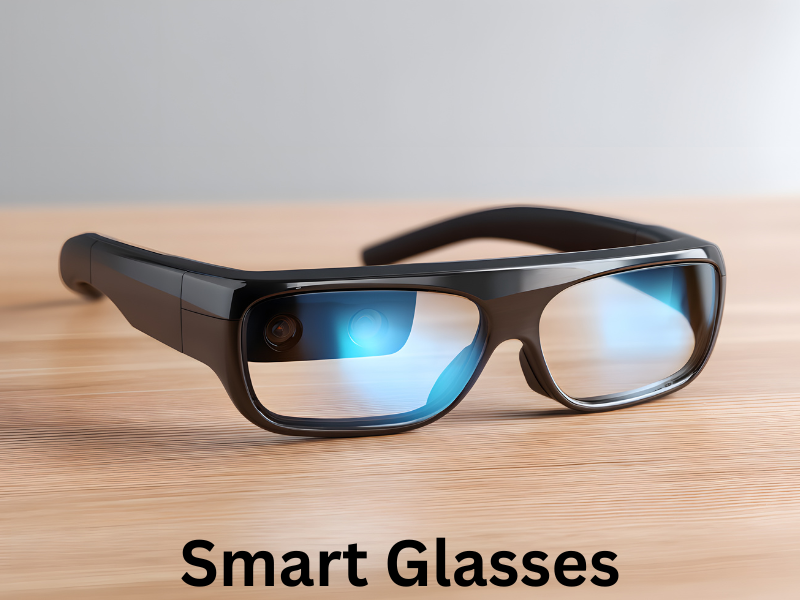
At first glance, smart glasses look like regular eyewear, but beneath their sleek frames lies advanced technology designed to make everyday life smarter and more convenient. Smart glasses are wearable devices that combine the function of traditional spectacles with digital tools such as microphones, speakers, sensors, Bluetooth, and sometimes even augmented reality (AR) displays.
The core idea behind smart glasses is to give users quick, hands-free access to information without constantly reaching for a smartphone. By wearing them, you can make and receive calls, listen to music or podcasts, get navigation guidance, track fitness activities, and even capture photos or videos. Some advanced models go further, offering features like real-time translation or projecting AR overlays directly into your vision.
For example, if you are walking through a busy city, smart glasses can display turn-by-turn directions on the lens so you never need to check your phone. If you’re exercising, you can listen to your workout playlist while still hearing the traffic around you. If you’re in a foreign country, AR-enabled smart glasses can translate street signs or conversations instantly. This makes them not just a gadget, but a versatile tool for communication, entertainment, productivity, and accessibility.
Unlike bulky VR headsets, smart glasses are designed for everyday wear. They are lightweight, stylish, and increasingly available with prescription lens support, so users don’t have to compromise on comfort or fashion. Different brands focus on different strengths: Bose Frames emphasize superior audio, Ray-Ban Stories (by Meta) blend style with camera functions, while Vuzix Blade and Google Glass Enterprise lean toward professional and industrial applications.
In short, smart glasses are more than eyewear—they are an extension of your digital world, bridging the gap between technology and daily living in a natural, hands-free way.
How Smart Glasses Work
Smart glasses may look simple from the outside, but they combine multiple layers of technology to deliver a seamless, hands-free experience. At their core, they work by connecting to your smartphone or Wi-Fi and using built-in hardware such as microphones, speakers, sensors, and sometimes mini displays to perform tasks. Let’s break down how they function.
- Connectivity:
Most smart glasses pair with your smartphone through Bluetooth. Once connected, they sync with your contacts, notifications, music, and apps. Some enterprise-level models also use Wi-Fi or have SIM/eSIM support, making them partially independent of smartphones. - Audio Transmission:
Instead of traditional earphones, smart glasses use open-ear speakers or bone conduction technology. Bone conduction transmits sound through your cheekbones, allowing you to hear audio while keeping your ears open to environmental sounds—making it safer for outdoor use. - Microphones:
Multiple noise-canceling microphones are built into the frame to capture your voice clearly, even in noisy environments. This ensures smooth calling and accurate voice commands. - Control Options:
Smart glasses typically offer three ways to control features: touch sensors on the frame (tap, swipe, or slide), voice assistants (like Siri, Alexa, or Google Assistant), and sometimes gesture recognition. These make them truly hands-free. - Displays and AR Overlays:
Advanced models use tiny projectors or transparent displays built into the lens to show data. This could be navigation arrows, translation subtitles, or even workout statistics. - Sensors:
Just like smartwatches, many smart glasses come with accelerometers, gyroscopes, and GPS. These track movement, count steps, measure calories, and assist in navigation.
Together, these components create an experience where you can answer calls, follow maps, play music, and access information—all while keeping your hands and eyes free to focus on the real world.
Key Features of Smart Glasses
Smart glasses are not just another gadget; they are a combination of multiple devices in one. From phone functions to health monitoring, these glasses pack a wide range of features designed for convenience, productivity, and entertainment. Below are the most important features, each explained in detail with practical examples.
1. Hands-Free Calling
One of the biggest attractions of smart glasses is the ability to make and receive calls without holding your phone. Built-in microphones pick up your voice, while tiny speakers or bone conduction systems transmit sound directly to your ears. For instance, if you are driving, you can answer a call simply by saying a command or tapping the frame, without taking your hands off the wheel. Similarly, while cooking or exercising, you can stay connected without pausing your activity. This feature adds not only convenience but also safety in daily life.
2. Voice Assistant Integration
Smart glasses often integrate with digital assistants such as Siri, Alexa, or Google Assistant. This means you can ask questions, set reminders, dictate messages, or even control smart home devices without touching your phone. For example, if you’re in the kitchen and your hands are messy, you can simply ask your glasses to call someone, add items to your grocery list, or play music. This feature turns your glasses into a personal assistant that is always ready to respond.
3. Notifications and Reminders
Instead of constantly checking your smartphone, smart glasses deliver subtle notifications directly into your vision or through audio cues. Whether it’s a text message, a calendar reminder, or a social media alert, you can stay updated without being distracted. This is particularly useful in meetings or while traveling, where you don’t want to appear glued to your phone but still need to stay informed.
4. Entertainment (Music, Podcasts, Audiobooks)
Smart glasses double as personal audio devices. With built-in speakers or bone conduction, you can enjoy your favorite playlists, podcasts, or audiobooks while still hearing what’s happening around you. This makes them safer than traditional earphones, especially when walking, cycling, or jogging outdoors. For example, Bose Frames are designed primarily with audio in mind, offering high-quality sound without covering your ears.
5. Real-Time Navigation and AR Overlays
Navigation is one of the most practical uses of smart glasses. Instead of looking at your phone screen for directions, AR-enabled glasses display arrows, maps, or instructions right in front of your eyes. Imagine cycling through a busy city and seeing turn-by-turn directions projected onto your lens—you stay on course without risking distractions. This feature is also helpful for pedestrians in unfamiliar locations and delivery personnel navigating new routes.
6. Fitness and Health Tracking
Some smart glasses include sensors similar to those in smartwatches. These can track steps, calories, heart rate, and overall activity. For fitness enthusiasts, this means one less device to carry. For example, while jogging, you can monitor your performance while enjoying music and still being able to answer calls—all through your glasses.
7. Photography and Video Recording
Several smart glasses models, such as Meta Ray-Ban Stories, come with built-in cameras that allow you to take photos or record short videos. This is perfect for travelers, vloggers, or even professionals who need to document tasks hands-free. Imagine walking on a vacation trail and capturing scenic views without pulling out your phone. However, this feature does raise privacy concerns, which we’ll discuss later.
8. Real-Time Translation
One of the most futuristic yet practical features of advanced smart glasses is real-time translation. AR-powered glasses can display translated text directly on the lens as someone speaks. For travelers, this eliminates language barriers, making interactions smoother in foreign countries. For students or professionals, this feature makes global collaboration easier.
9. Accessibility Tools
Smart glasses are also being designed to help differently abled users. Features like text-to-speech, magnification, or visual guidance for the visually impaired make them more than just luxury gadgets—they become assistive technology that improves quality of life.
Why Features Matter
The real power of smart glasses lies in how these features come together. Instead of juggling between earphones, fitness trackers, smartphones, and cameras, you get a compact, stylish device that performs multiple roles. For professionals, it means higher productivity; for travelers, it means safety and convenience; for fitness lovers, it means an all-in-one workout companion.
Benefits of Smart Glasses
Smart glasses are more than just a stylish gadget—they’re practical tools that solve real-world problems. By combining communication, entertainment, navigation, and health tracking in one device, they bring a new level of convenience to daily life. Let’s look at the major benefits in detail.
1. Hands-Free Communication
One of the strongest benefits of smart glasses is the ability to communicate safely and efficiently. Imagine driving on a busy road—answering a call with your phone is both risky and inconvenient. With smart glasses, you can take that call hands-free using voice commands. Similarly, while cooking, exercising, or working with your hands, you don’t have to stop what you’re doing to respond. This makes communication smoother, safer, and far more convenient.
2. Boost in Productivity
For professionals, smart glasses act as a time-saving assistant. Notifications, reminders, and important updates are delivered subtly without the constant distraction of pulling out a smartphone. In meetings, you can stay informed without looking distracted. For field workers, technicians, or engineers, smart glasses can display work instructions directly in their line of sight, allowing them to focus on the task while staying connected.
3. Safer Navigation
Navigation is another area where smart glasses excel. Pedestrians, cyclists, and drivers can follow AR-based turn-by-turn directions without looking down at their phones. This not only improves convenience but also enhances safety. Delivery personnel, for example, can complete routes more efficiently without losing focus on their surroundings.
4. Entertainment Without Isolation
Unlike traditional earphones that block outside sounds, smart glasses let you enjoy music, podcasts, or audiobooks while still being aware of your environment. This makes them safer for outdoor activities like jogging or cycling. Parents walking with children or commuters in crowded areas can enjoy entertainment without compromising awareness.
5. Fitness and Health Motivation
With built-in fitness tracking, smart glasses help users monitor steps, calories, or workouts. This benefit is particularly appealing to fitness enthusiasts who don’t want to carry multiple devices. For example, you can track your morning jog while listening to a podcast and still be able to answer calls—all in one device.
6. Accessibility for All
Smart glasses also play an important role in accessibility. Features like text-to-speech, magnification, or voice guidance help visually impaired individuals. Real-time translation removes language barriers for travelers or students. This turns smart glasses into more than just luxury gadgets—they become inclusive technology that makes life easier for everyone.
7. Fashion Meets Function
In the past, wearable devices often looked bulky and unattractive. Modern smart glasses, however, are designed with fashion in mind. Models like Meta’s Ray-Ban Stories or Bose Frames blend cutting-edge technology with stylish frames, meaning you don’t have to choose between looking good and staying connected.
The Bigger Picture
The greatest benefit of smart glasses lies in their all-in-one versatility. Instead of carrying separate devices—headphones, fitness trackers, phones, and cameras—you can enjoy all these features in a single accessory that looks like everyday eyewear. This balance of convenience, safety, productivity, and style is what makes smart glasses one of the most promising wearable technologies of 2025.
Real-Life Use Cases of Smart Glasses
While the features of smart glasses are impressive, their true value becomes clear when we see how they fit into everyday life. From professionals and travelers to students and healthcare workers, smart glasses are proving useful in multiple scenarios. Here are some real-world applications.
1. Working Professionals
For business executives and office employees, time management is everything. Smart glasses make this easier by delivering notifications, reminders, and emails without the need to check a phone. During business travel, professionals can join calls hands-free, navigate unfamiliar cities, and even access presentations with AR overlays. For example, a sales executive could receive calendar reminders during a client meeting without interrupting the conversation.
2. Drivers and Riders
Safety is a top concern for drivers and bikers, and smart glasses provide a solution. Instead of looking down at a phone for directions, drivers can follow AR-based arrows projected into their field of vision. Calls can be answered through voice commands without taking hands off the wheel. Motorcyclists benefit from audio navigation and traffic alerts while staying aware of their surroundings. Delivery riders using smart glasses save time and reduce risks by focusing fully on the road.
3. Students
For students, smart glasses open up new learning opportunities. They can access online study material, record lectures with built-in cameras, and translate foreign texts instantly. Imagine attending an international seminar and getting real-time subtitles displayed directly on your lens. In science or engineering studies, AR-enabled smart glasses can project 3D models to make complex concepts easier to understand.
4. Fitness Enthusiasts
Fitness lovers are among the biggest beneficiaries of smart glasses. While jogging or cycling, they can track heart rate, calories, and distance without carrying a smartwatch. At the same time, they can listen to workout playlists or podcasts through open-ear audio. Since the ears remain uncovered, athletes can remain aware of traffic or other sounds in the environment, ensuring safety while exercising outdoors.
5. Travelers
Travelers face constant challenges such as navigating new cities and overcoming language barriers. Smart glasses help by offering GPS-based directions, translation tools, and instant photo or video capture. Imagine exploring a foreign market where every signboard is translated in real-time on your lens. Tourists can also record their experiences hands-free, making travel more convenient and immersive.
6. Healthcare Professionals
In medicine, smart glasses are playing an increasingly important role. Surgeons use AR overlays to guide complex operations, while doctors can consult with specialists remotely through live video feeds. Nurses and caregivers use them to track patient vitals and receive alerts. These applications not only save time but also improve accuracy in critical situations.
7. Engineers and Field Workers
Field engineers, mechanics, and technicians often need both hands to perform their tasks. With smart glasses, they can receive live instructions from supervisors, access repair manuals, or capture video of their work for troubleshooting. This hands-free access to information improves efficiency and reduces errors in industries like manufacturing, construction, and aviation.
Popular Smart Glasses in 2025
Here are some of the top smart glasses models currently on the market, each suited to different user needs.
- Ray‑Ban Meta (Ray‑Ban Stories): These combine the iconic Ray-Ban frame style with smart features like dual cameras, open-ear speakers, and voice control. For example, the original Ray-Ban Stories offered photo capture at 2 592 × 1 944 resolution and video at 1 184 × 1 184 @30fps. glassesusa.com+4Tom’s Guide+4Moor Insights & Strategy+4 They’re ideal for users looking for smart eyewear that looks like regular sunglasses, and is great for casual use, travel, and everyday capturing of moments.
- Bose Frames: Focused on audio-first experience, these smart glasses provide open-ear audio with built-in speakers, hands-free calls, and lightweight design. For example, one model offers up to 5.5 hours of battery life and uses TR-90 nylon frames with IPX2 rating. global.bose.com+1 They are a great fit for music lovers, commuters, or those who want smart audio without heavy AR or camera features.
- Bose Frames Alto: A variant of Bose’s smart audio glasses line, again emphasizing high-quality sound and everyday wearability, appealing to users who prioritise audio and style over full AR functionality. global.bose.com
- Fire‑Lens Dune Smart Glasses: A budget-friendly smart glasses option offering basic smart functions. These may lack advanced AR or camera features of premium models but provide an entry point into smart eyewear, suitable for first-time buyers or casual users.
- Ray‑Ban Wayfarer Square Ai Glasses: Another Ray-Ban smart eyewear model, leaning into AI and future-ready features. For users who want more than just audio or camera — perhaps early AR or AI integration — this is aimed at that segment.
- Active Pixel Bluetooth Audio Smart Glasses: A very low-price smart-glasses model, suitable for users who want some smart functionality (audio, hands-free calls) without the premium cost. Good for everyday use and casual smart glasses experience.
Recommendation by User Type
- Style-First / Casual Use: If you want a smart glasses look that blends with regular sunglasses and lets you capture photos or video casually, the Ray-Ban Meta or Wayfarer models are perfect.
- Audio-Focused Use: For users who mainly want high-quality music, calls, and smart audio, Bose Frames or Alto fit best.
- Budget or Entry Level: If you’re just dipping into smart glasses and want basic functionality like audio or calls, then Fire-Lens Dune or Active Pixel models are good options.
- Early Adopter / Advanced Features: If you’re interested in emerging AI or AR capabilities, the Wayfarer Ai or upcoming models that support deeper smart-assistant or AR overlays will be interesting.
Industry-Wise Applications of Smart Glasses
While many people think of smart glasses as a personal gadget for calling or listening to music, their true potential shines in professional and industrial settings. Across multiple industries, smart glasses are transforming how people work, learn, and interact.
1. Healthcare
In healthcare, precision and real-time access to information are critical. Surgeons are already using AR-enabled smart glasses to overlay 3D anatomical models during operations, improving accuracy and reducing risks. Doctors in rural areas can consult specialists remotely through live video feeds captured by smart glasses, making telemedicine more effective. Nurses can use them to monitor patient vitals, receive medication reminders, or update electronic health records hands-free. This improves efficiency and allows healthcare staff to focus more on patients rather than paperwork.
2. Education
Education is another sector where smart glasses are opening new opportunities. Students can use AR features to visualize complex concepts such as 3D molecules in chemistry or architectural structures in engineering. Language students can benefit from real-time translation displayed on the lenses, making foreign language learning easier. Teachers can also use smart glasses to record lectures from their own perspective, creating immersive study materials. In professional training, especially in technical fields, smart glasses provide live instructions and interactive simulations that enhance learning.
3. Business and Corporate Work
For business professionals, time is money. Smart glasses deliver reminders, emails, and notifications directly in the field of vision without interrupting meetings or presentations. Remote teams can collaborate more effectively using AR glasses to share visuals and instructions in real-time. For example, an architect can showcase a 3D model of a building during a meeting, allowing clients to see designs more clearly. Executives traveling abroad can also use translation tools and navigation features to manage schedules with ease.
4. Retail
Retailers are experimenting with smart glasses to improve customer service and backend operations. Sales staff can access product information instantly without leaving the customer’s side. Inventory managers can scan stock, check availability, and receive alerts about low stock levels hands-free. For customers, AR-based smart glasses may soon provide virtual try-on experiences, letting them see how clothes, furniture, or accessories look before making a purchase.
5. Logistics
Logistics companies are using smart glasses to increase efficiency in warehouses and delivery networks. Workers can scan barcodes and track shipments hands-free, making operations faster and more accurate. Delivery drivers can follow optimized routes with AR navigation displayed directly on their glasses, reducing delays and fuel costs. In industries like aviation or shipping, maintenance staff use smart glasses to check large equipment for safety inspections in less time.
6. Gaming and Entertainment
Gaming is one of the most exciting areas for smart glasses. With AR, players can interact with characters and environments that appear in the real world. Instead of being isolated like with VR headsets, AR gaming keeps players engaged with their surroundings. Entertainment industries are also experimenting with live concerts or sports events where smart glasses can display real-time stats, lyrics, or interactive experiences.
7. Tourism
Travelers often struggle with maps, guides, and language barriers. Smart glasses solve these problems with real-time translation, AR navigation, and guided tours. Imagine walking through a historical site and seeing interactive overlays that explain monuments or artifacts. For tourists in foreign countries, signs and conversations can be translated instantly, making travel more immersive and stress-free.
The Takeaway
Across industries, smart glasses are proving to be more than personal gadgets. They are powerful professional tools that improve accuracy, safety, and efficiency. From healthcare and logistics to gaming and tourism, their applications are diverse, making them one of the most promising wearable technologies for both personal and business use.
Challenges and Limitations of Smart Glasses
As exciting as smart glasses are, they are not without challenges. Like any emerging technology, they face barriers that slow down widespread adoption. Understanding these limitations helps set realistic expectations for users and businesses.
As exciting as smart glasses are, they are not without challenges. Like any emerging technology, they face barriers that slow down widespread adoption. Understanding these limitations helps set realistic expectations for users and businesses.
1. Battery Life
One of the most common complaints is short battery life. Most consumer models last between 3 to 8 hours on a single charge, depending on usage. AR-enabled glasses that display visuals drain power even faster. For professionals or travelers who need all-day performance, frequent charging becomes inconvenient. Until battery technology improves, this will remain a significant drawback.
2. Privacy and Security Concerns
Built-in cameras and microphones raise serious privacy concerns. People around you may feel uncomfortable not knowing whether they are being recorded. In public spaces, recording without consent can also create legal and ethical issues. Companies are working on clearer recording indicators (like LED lights) to address these concerns, but public acceptance still has a long way to go.
3. High Cost
Premium smart glasses with AR and advanced features often cost anywhere from $500 to $1000+, which puts them out of reach for average consumers. While budget-friendly models exist, they usually offer only limited functionality. Until prices become more affordable, adoption will remain limited to enthusiasts, professionals, and businesses.
4. Limited App Ecosystem
Compared to smartphones, the app ecosystem for smart glasses is still underdeveloped. Many glasses only support basic functions like calls, music, and notifications. AR-enabled apps are slowly growing, but mass adoption requires a more robust and diverse app store.
5. Style and Comfort Issues
Not everyone finds smart glasses comfortable or stylish. Some models are bulkier than regular glasses due to built-in tech. Others lack prescription lens support. While newer designs are improving, style-conscious users may hesitate to switch from regular eyewear.
The Future of Smart Glasses
Smart glasses today are already impressive, but what excites experts even more is their future potential. With advancements in AI, AR, 5G, and wearable design, these devices are expected to evolve far beyond what we currently use. In the next 5–10 years, smart glasses could become as common as smartphones.
1. AI-Powered Personal Assistants
Smart glasses will integrate more deeply with artificial intelligence. Instead of just responding to commands, future models will anticipate your needs. For example, AI-powered glasses could remind you of a meeting as soon as you enter your office, suggest the fastest route when traffic builds up, or even detect stress in your voice and recommend a break. These glasses won’t just display information—they will act as proactive personal assistants.
2. 5G Connectivity and Real-Time Experiences
With the global rollout of 5G networks, smart glasses will benefit from ultra-fast, low-latency connections. This will enable smooth AR overlays, real-time translations, and high-quality video streaming without lag. Imagine attending a live concert where lyrics and behind-the-scenes content appear instantly on your glasses, or joining a virtual meeting where 3D models are projected in front of you.
3. Advanced Health Monitoring
Just as smartwatches evolved into health trackers, smart glasses are expected to move in the same direction. Future models may include sensors that monitor blood oxygen levels, blood pressure, stress, and fatigue. For instance, glasses could alert you if your oxygen drops while hiking at high altitudes, or if your posture during work is causing strain. This could transform smart glasses into essential health companions.
4. Seamless Integration with IoT Devices
Smart glasses are also expected to become central controllers for smart homes, cars, and workplaces. You could unlock your car, adjust room lighting, or control your TV with just a glance or voice command. Instead of juggling multiple apps, smart glasses could serve as a universal remote for connected living.
5. Augmented Reality Shopping and Work
Retail and e-commerce will be revolutionized. With AR glasses, shoppers can try on clothes, preview furniture in their homes, or see product details floating in the air. In offices, professionals could collaborate on virtual whiteboards or work on 3D prototypes together in real-time. Industries like construction and architecture will benefit from AR models that overlay designs directly onto physical spaces.
6. More Stylish, Lightweight Designs
As technology advances, bulky frames will disappear. The smart glasses of the future will look identical to normal glasses, with ultra-thin displays and long-lasting batteries. Prescription options will become standard, making them practical for everyday users. In short, they’ll become fashion-first wearables rather than obvious tech devices.
7. Mass Adoption and Mainstream Use
Just as smartphones went from luxury items to daily essentials, smart glasses are expected to follow the same path. As prices fall, designs improve, and features expand, we may reach a point where glasses are no longer optional but essential digital companions.
Buying Guide: How to Choose the Right Smart Glasses
With so many smart glasses entering the market in 2025, choosing the right pair can feel overwhelming. The best way to decide is to focus on your needs, lifestyle, and budget. Here’s a step-by-step guide to help you make the right choice:
1. Define Your Purpose
Start by asking yourself: Why do I need smart glasses?
- If your focus is hands-free calling and notifications, go for models like Amazon Echo Frames or Ray-Ban Meta.
- If you are a fitness enthusiast, look for glasses with activity tracking and open-ear audio for safe workouts.
- If you are a professional, AR-enabled models like Vuzix Blade or Google Glass Enterprise may suit you best.
- For casual entertainment, Bose Frames are a great choice.
2. Check Battery Life
Battery life is one of the biggest limitations of smart glasses. Most consumer models last between 4 to 8 hours. If you need them for long workdays or travel, prioritize models with better battery optimization or fast charging.
3. Comfort and Design
Since glasses are worn on the face, comfort is critical. Look for lightweight frames that don’t strain your nose or ears during long use. If you already wear prescription lenses, ensure the brand supports prescription-friendly frames. Models like Ray-Ban Meta blend technology with stylish everyday eyewear, making them practical for daily wear.
4. Compatibility with Devices
Not all smart glasses work equally well with all operating systems. Check whether the model is optimized for Android, iOS, or both. For example, Apple’s upcoming glasses will likely work best with iPhones, while Amazon Echo Frames pair naturally with Alexa.
5. Budget vs Features
Prices vary widely—from ₹2,000 entry-level models to ₹70,000+ premium AR glasses. Don’t pay for features you won’t use. If you only need music and calls, budget options may be enough. For professionals, investing in advanced AR models might be worth it.
Final Tip
The “best” smart glasses are the ones that fit your lifestyle. Whether it’s for work, travel, fitness, or fashion, prioritize comfort, battery, and features that align with your everyday needs.
FAQs on Smart Glasses
Q1. Can smart glasses replace smartphones?
Not yet. Smart glasses are designed to complement smartphones, not replace them. They handle calls, music, and navigation well, but they don’t yet support full app ecosystems like smartphones.
Q2. How long does the battery last?
Most consumer models last between 3 to 8 hours, depending on usage. Audio-only models (like Bose Frames) last longer than AR-enabled ones.
Q3. Do smart glasses work with both Android and iOS?
Yes, most models support both platforms. However, some work better with specific systems—for example, Echo Frames with Alexa (Android/iOS) and Apple’s upcoming glasses with iPhones.
Q4. Are smart glasses safe for eyes?
Yes. They use safe projection or display technologies. However, prolonged use of AR overlays may cause mild eye strain, so moderation is recommended.
Q5. Can smart glasses be used with prescription lenses?
Yes. Brands like Ray-Ban Meta and Bose Frames offer prescription lens options. Many premium models are designed with prescription support in mind.
Q6. Do smart glasses have cameras?
Some models do. Ray-Ban Meta glasses, for instance, include 12 MP cameras for photos and short video clips. Others focus only on audio and notifications.
Q7. Are there privacy concerns?
Yes. Built-in cameras and microphones raise concerns in public places, since people may not know if they are being recorded. Most models include visible recording indicators to address this.
Q8. Are smart glasses waterproof?
Generally, they are splash- or sweat-resistant, not fully waterproof. They’re fine in light rain or workouts but not for swimming or showers.
Q9. Can they play music?
Yes. Most models have open-ear speakers or bone conduction systems, letting you enjoy music while staying aware of your surroundings.
Q10. Can I use them for navigation?
Yes. AR-enabled smart glasses display directions directly in your vision. Audio-based models provide voice-guided navigation.
Q11. How much do smart glasses cost in 2025?
Prices range from ₹2,000 (basic models) to ₹70,000+ (advanced AR versions). Popular mid-range options cost between ₹25,000–₹40,000.
Q12. Do they need an internet connection?
Basic features (calls, music, fitness tracking) work offline. But AR, translation, and voice assistants require internet access.
Q13. Can smart glasses translate languages?
Yes. Some AR models can display translated text in real-time, making them useful for travelers.
Q14. Do they record video continuously?
No. Most smart glasses can only capture short video clips (30–60 seconds) to prevent overheating and protect privacy.
Q15. Are they heavy to wear?
Most modern designs are lightweight and made from materials like nylon or carbon fiber. They feel similar to regular glasses but may feel slightly heavier with cameras or AR displays.
Q16. Are smart glasses comfortable for daily wear?
Yes, especially models designed for casual users (Ray-Ban, Bose). Enterprise-focused AR glasses can be bulkier.
Q17. Can children use smart glasses?
Currently, most are designed for adults. Simplified, child-friendly versions may appear in the future, but they are not widely available yet.
Q18. Are they useful for students?
Yes. Students can record lectures, access translations, and use AR to study complex concepts.
Q19. Do they support fitness tracking?
Some models track steps, calories, and heart rate. However, they are less advanced than dedicated smartwatches in this area.
Q20. Do they work indoors and outdoors?
Yes. They work both indoors and outdoors, though AR displays are easier to see in shaded or indoor environments.
Q21. Do they cause headaches?
Only in rare cases of prolonged AR use. Like any screen, taking breaks helps prevent strain.
Q22. Are they voice-controlled?
Yes. Most models support voice commands for calling, texting, navigation, and controlling apps.
Q23. Which brand makes the best smart glasses?
It depends on your needs:
- Ray-Ban Meta: Style + cameras
- Bose Frames: Best audio
- Amazon Echo Frames: Voice assistant focus
- Vuzix Blade: AR + enterprise use
Q24. Are they worth buying in 2025?
Yes, especially for professionals, travelers, fitness enthusiasts, and early tech adopters. For everyday casual users, it depends on your budget.
Q25. Will smart glasses become common in the future?
Yes. With companies like Apple, Meta, and Google investing heavily, smart glasses are expected to become as common as smartphones within the next 5–10 years.
Conclusion
Smart glasses are no longer futuristic prototypes or experimental gadgets—they are practical, stylish, and increasingly powerful tools that are already improving how people communicate, work, travel, and stay entertained. By combining features like hands-free calling, real-time navigation, fitness tracking, music playback, and even AR overlays, they bring together the functions of multiple devices into one convenient accessory.
In 2025, the smart glasses market is seeing contributions from big names like Meta, Bose, Amazon, Google, Xiaomi, and Apple, each focusing on unique strengths such as style, audio, or AR functionality. Whether you are a professional who needs productivity tools, a fitness lover who wants hands-free performance tracking, or a traveler who values translation and navigation, there’s a pair of smart glasses suited to your lifestyle.
However, challenges like short battery life, high costs, and privacy concerns still exist. These hurdles are very similar to those faced by early smartphones and smartwatches, and just like those devices, continuous innovation is expected to solve them. With improvements in AI, AR, 5G, and health monitoring, smart glasses are set to evolve into everyday essentials in the coming decade.
For now, the decision to invest depends on your needs. If you value hands-free convenience, staying connected without distractions, and blending fashion with technology, smart glasses are a strong choice. They represent not only the future of communication but also a new way of living where digital tools enhance daily life seamlessly.
In short, smart glasses are the next big leap in wearable technology—and the future looks bright.